Strategy
Part of Adapting a Verified Source Is the Whole Job of Content Repurposing
Content Repurposing Case Studies: The Results and the Conditions Behind Them
Named content repurposing case studies show what Motion and dentsu reported, what each account leaves unproven, and the conditions a copy has to meet.
What to take away
- These content repurposing case studies start from different inputs. Motion uses recorded client conversations; dentsu uses brand templates and asset libraries.
- Moz, Red Bull Media House, The New York Times and Vaynerchuk start from weekly video, owned event footage, daily reporting and long recordings respectively.
- Every account was published by the company that runs the method or by a partner vendor, so speed and workload gains are attributed claims, not measured outcomes.
- Before copying any method, pin down the baseline, the measurement period, the excluded labor, the rights position and who owns upkeep.
- A case is worth copying only when its operating conditions match yours, the same test the site applies to content repurposing work in general.
- Record the evidence beside the decision, including rejected options, so a reviewer can rebuild the reasoning later.
Six named content repurposing case studies
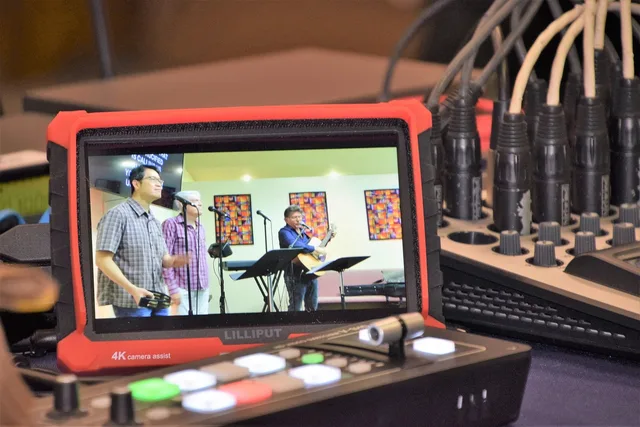
Descript's Motion Agency profile describes an agency that turns recorded client conversations into podcast episodes, short clips, articles and social assets, with writing and editing running in parallel. The page is published by Descript, the tool vendor, and is undated, so no publication or measurement period is stated.
The reported claim is four output types from one recording: a podcast episode, short clips, an article and social assets. The page gives no speed or cost data.
Adobe's dentsu customer story describes designers building brand templates and libraries that marketers then adapt into social posts, animations, video, thumbnails and profile images, across several markets. Adobe publishes it, and the page text is undated, so no publication or measurement period is stated.
The reported claim is five output types from one template set. The page gives no speed or cost data.
Moz, the Seattle SEO software company, pairs each Whiteboard Friday video with a transcript, a blog post and an audio version. The series has run weekly for years with a rotating host.
One scheduled shoot each week feeds the blog, the podcast feed and social clips. The known volume is one video a week and three derivative formats per video.
Red Bull Media House, the energy drink company's in-house production arm founded in 2007, owns footage from events it runs and reuses it across television, print and digital.
The 2012 Stratos balloon jump alone produced a documentary, short clips and social assets, and its live stream drew about 8 million concurrent viewers on YouTube, a reported record at the time. Owning the camera and the rights keeps the reuse cheap.
The New York Times launched The Daily in 2017, turning reporting the newsroom had already gathered into a daily audio show.
The podcast then feeds clips and newsletter items. The show publishes every weekday, roughly 250 episodes a year, a typical figure for a weekday show. The condition is a newsroom that produces original reporting every day plus a dedicated audio team to adapt it.
Gary Vaynerchuk's VaynerMedia built its content model on the reverse pyramid: record one long keynote or podcast episode, then cut it into micro videos, quote graphics and posts. The public claim is one long recording cut into dozens of micro assets. The condition is plenty of raw footage and an editing team that clips on a schedule.
What each named account leaves unproven
Treat every figure in these accounts as an attributed claim, not a measured outcome. None of the six accounts publishes a cost or labor figure per derivative asset; those costs depend on clip count, review rounds, rights clearance and editing time.
For Motion, the open items are these:
What each account leaves unproven
- the client list
- the measurement period
- the sample of conversations
- how much editorial labor the agency added
- which services were billed
Rights, distribution terms, attribution rules and current results are not stated.
For dentsu, ask which teams and markets were in scope, what the comparison baseline was, which product versions and implementation services were used, and how approvals and defect rates were handled. Excluded labor is the usual gap: template maintenance rarely appears in a speed claim.
Moz, Red Bull Media House, The New York Times and Vaynerchuk describe their methods more loosely. Ask who clips, who clears rights for reused footage and voice, and what each derivative asset costs in staff time.
What each account leaves unproven
| Account | Stated method | Still unverified |
|---|---|---|
| Motion | Recorded conversations cut into mixed formats | Independent costs, rights, current outcomes |
| dentsu | Templates and libraries reused across teams and markets | Comparable baseline, excluded labor, defect rate |
| Moz | Weekly video transcribed into blog, audio and clips | Staff hours per derivative, clip performance |
| Red Bull Media House | Owned event footage reused across channels | Cost per asset, rights splits with athletes |
| The New York Times | Daily reporting adapted into an audio show | Audio team cost, value added beyond the article |
| Vaynerchuk | One long recording cut into micro assets | Clip volume, editing cost, audience overlap |
| Your pilot | Your own sources, audience and controls | Defects, upkeep cost, exit terms |
Run the transfer test before you copy anything
Run the transfer test
- Score the sourcewho published it, what they sold, and what they measured.
- Score the fitaudience job, formats, markets and disclosure rules.
- Add accessibility obligations and distribution channels.
Transfer Test Before Copying
- Score sourcepublisher, what sold, what measured
- Score fitaudience job, formats, markets, disclosure
- Add accessibility obligations and distribution channels
- Reproduce one material claim with your own data
- If method unpublished, call it a lead not result
Run the transfer test
- Reproduce one material claim with your own data before you recommend a provider or rebuild a method.
- If the method is not published, call the item a lead for testing, not a verified result.
The FTC advertising substantiation policy requires a reasonable basis for objective advertising claims before they are disseminated. The FTC guidance on soliciting and paying for online reviews covers fake feedback, selective requests, conditioned incentives and undisclosed relationships. Both are U.S. rules; take advice on your own facts.
The same transfer discipline applies to internal work, which is what the site's content workflow case studies set out to do.
Keep the record beside the decision
Record Beside the Decision
- Source and selection criteria
- Commercial relationship and product version
- Study population and method
- Missing evidence
- Review date and trigger for earlier review
- Rejected options and the constraint that ruled them out
- The source, publisher and date.
- The claim tested and the baseline used.
- The measurement period and excluded labor.
- The rights position for footage, voice and templates.
- The options rejected and the constraint that ruled them out.
- The owner and review date for upkeep.
Record the options you rejected, because the constraint that ruled them out may later disappear. Skipping this step is one of the quieter content repurposing mistakes an impressive-looking case can hide.
Common questions
Do these case studies prove typical results?
No. These are selected accounts. None has an independent causal audit or evidence that another organization would reproduce the outcome. Read them as descriptions of a method, not as forecasts.
Does this review rank Descript above Adobe?
No. The accounts cover different organizations, products, periods and methods, so a ranking would compare nothing. This review is unpaid and takes no position on vendor performance.
What can a buyer actually copy?
Copy the questions and the pilot design. Verify your own source quality, audience task, rights position, and labor baseline. Also verify acceptance rules and exit plan before committing budget. This is the discipline a content repurposing checklist applies to every derivative asset.