Reviews
Part of Starting a Content Marketing Strategy: Begin With the Business Constraint
5 Points on Choosing Content Marketing Strategy Tools
content marketing strategy tools for 2027 compare Search Console and Google Analytics 4 by scope, grouping, evidence limits, governance, and decisions.
What to take away
- This unpaid, nonranking comparison covers five tools with different jobs: Search Console and GA4 for first-party measurement, Keyword Planner for demand ranges, Semrush and Ahrefs for external topic coverage.
- None of the five can establish audience need, first-hand expertise, factual accuracy, rights, or accessibility. Nor can a dashboard score prove causation, reader satisfaction, or business value.
- Test them against one real decision. Document setup, permissions, definitions, exclusions, and gaps. Then record privacy, retention, exports, and ownership. Add cost and failure handling.
Content marketing strategy tools should answer a defined planning question rather than replace audience research or editorial judgment. This unpaid, nonranking comparison was checked in September 2026 and relies on official documentation, not independent lab testing. Metrics, product names, and limits can change before 2027. So can access, privacy behavior, and reporting coverage.
Google Search Console
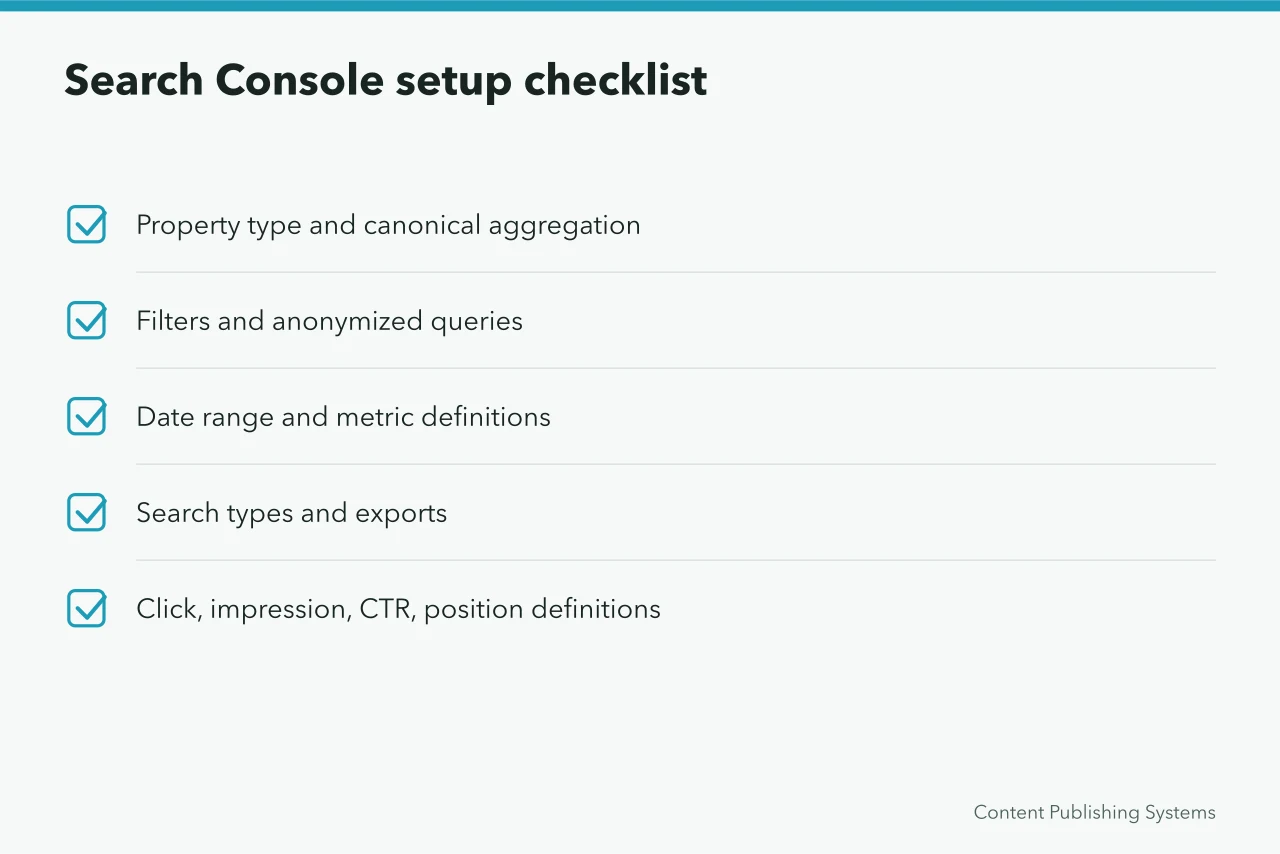
Google's Search Console performance-report guide documents performance data by dimension: queries, pages, countries, devices, and dates. Search appearance is another. Use it to investigate how a verified property appears and receives interactions in Google Search. It is free for verified owners.
Record property type, canonical aggregation, filters, anonymized queries, and data limits. Record date range and exact metric definitions. It cannot identify the full audience or what happened after a visit.
Search Console provides first-party data on how eligible site content appears and receives interactions across Google Search surfaces. It suits discovery analysis.
Google Analytics 4
Google Analytics' engagement-rate reference defines an engaged session as lasting over ten seconds by default, recording a key event, or having at least two page or screen views.
Engagement rate is the share of engaged sessions; bounce rate is its inverse. Treat these as product definitions: confirm the property's timer, events, consent, identity, and filters. Also confirm the intended outcome before judging content.
GA4 organizes related pages through content groups. It reports on pages, screens, events, engaged sessions, and key events based on implementation. Sources and audiences follow from that setup too. It suits on-site behavior and configured actions.
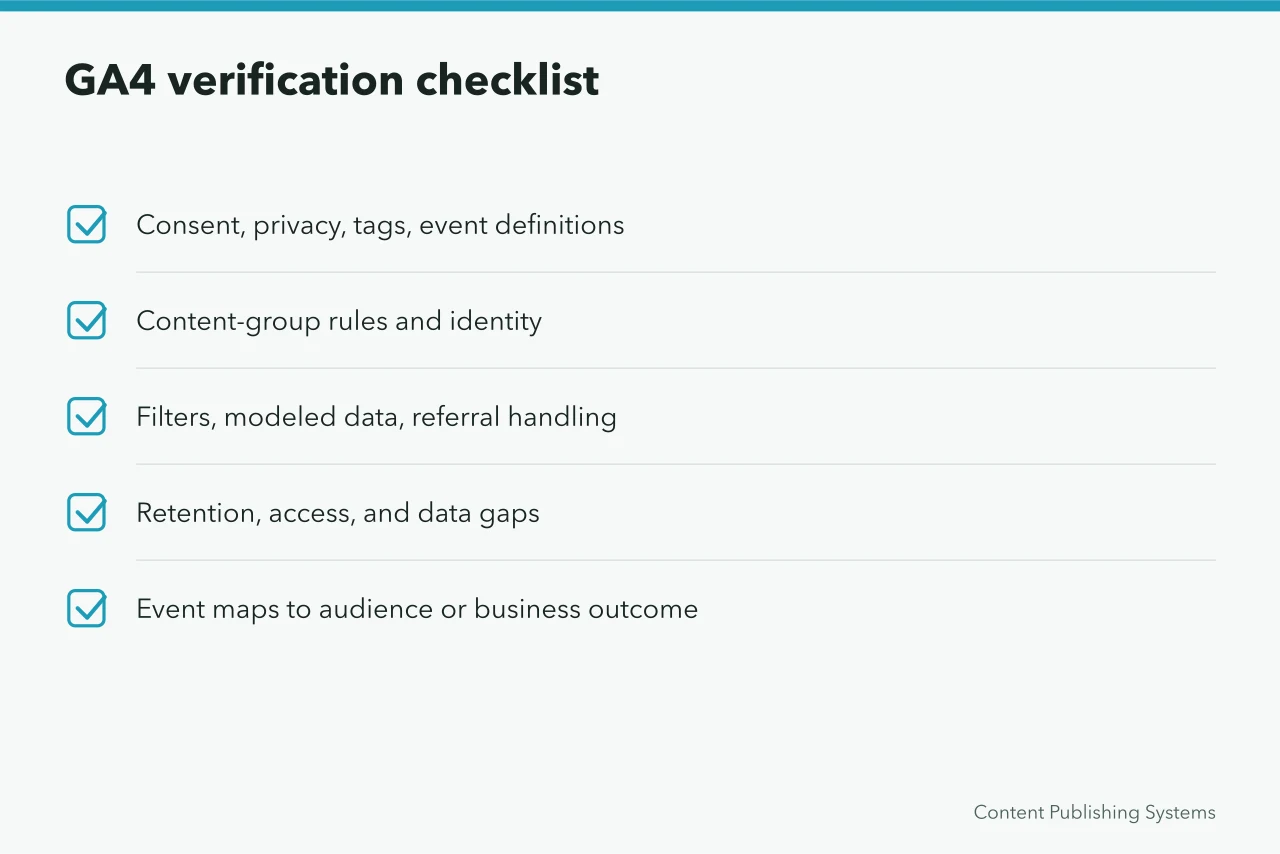
Standard properties are free and keep data for 2 or 14 months; Analytics 360 adds 26, 38, and 50 month retention options. Verify consent and privacy, tags, event definitions, content-group rules, and identity. Also check filters, modeled data, referral handling, and retention.
Confirm access rules and known data gaps. Check whether an event represents a useful audience or business outcome. Compare GA4 output against internal ranges, not an imported figure, as set out in content marketing strategy benchmarks.
Google Keyword Planner
Keyword Planner sits inside a Google Ads account and is free to use without running campaigns. It returns keyword ideas and volume ranges as broad buckets, not exact counts. Ranges widen for low-volume terms, so treat them as directional.
Teams use it for early demand sizing by location and language. It cannot show your site's ranking or what visitors do after they arrive.
Semrush
Semrush covers external ground: keyword research, competitor and SERP analysis, and position tracking. Its Keyword Magic Tool groups related terms into clusters you can export into a plan.
Semrush lists Pro at about $140 per month, Guru at about $250, and Business at about $500, with lower monthly rates on annual billing. A free account allows a small number of queries per day. Verify current figures at purchase.
Ahrefs
Ahrefs provides Site Explorer for backlinks and organic keywords, plus Keywords Explorer for demand research. Ahrefs Webmaster Tools is free for verified site owners and shows backlinks, site health, and limited keyword data.
Paid plans start around $29 per month for Starter, one project, with Lite and Standard tiers above it and lower monthly rates on annual billing. Ahrefs reports third-party estimates, not your analytics.
Run one decision test
Choose a real question, like which existing cluster needs repair. Compare first-party demand, on-site outcomes, external topic coverage, evidence quality, and audience interviews. Then compare maintenance cost and operational importance. Document conflicting signals and the decision rule you will apply.
Use test accounts or approved data, least privilege, and named owners. No tool verifies first-hand expertise, legal claims, accessible content, or reader satisfaction from a score alone.
Five-tool decision comparison
| Tool | Documented scope | Do not infer alone |
|---|---|---|
| Search Console | Google Search visibility and interaction | On-site use or revenue |
| Google Analytics 4 | Configured site or app behavior | Search demand or causation |
| Google Keyword Planner | Keyword ideas and volume ranges | Your rankings or site behavior |
| Semrush | External keyword, competitor, and SERP data | Your own site behavior or causation |
| Ahrefs | Backlink, organic keyword, and site health estimates | Your audience or content quality |
| Search Console plus GA4 | Platform-collected observational data | Audience need or content truth |
Test the operating burden
The GOV.UK technology selection guidance recommends adaptable choices, data control, security review, and ownership-cost analysis. Use those public-service questions when assessing content marketing strategy tools; they are not product endorsements.
The GOV.UK open standards guidance links open standards with interoperability and reduced supplier dependence. Test whether data and definitions can move between content marketing strategy tools, while keeping the page's UK public-service context clear.
Common questions
Which content strategy tool should a team install first?
Choose the tool that answers the first defined decision. Search Console addresses Google Search discovery; GA4 addresses configured site or app behavior. Keyword Planner, Semrush, and Ahrefs cover external demand and competitor context. Many teams need several, plus qualitative research and business records.
Can these tools prove content caused a sale?
No. They can provide observational signals under a particular implementation. Causal questions require an appropriate design, clean definitions, relevant business data, and honest treatment of other influences.
How should the tools be compared?
Use the same decision, time window, content set, governance criteria, and written definitions. Investigate disagreements instead of averaging incompatible metrics, and record the comparison as sign-off evidence the way content marketing strategy checklist requires.