Costs
How to Budget a Customer Case Study for Content Marketing
Customer case study budgets should separate source work from writing, permissions and updates. Notes for US content teams scoping research costs before they commit.
What to take away
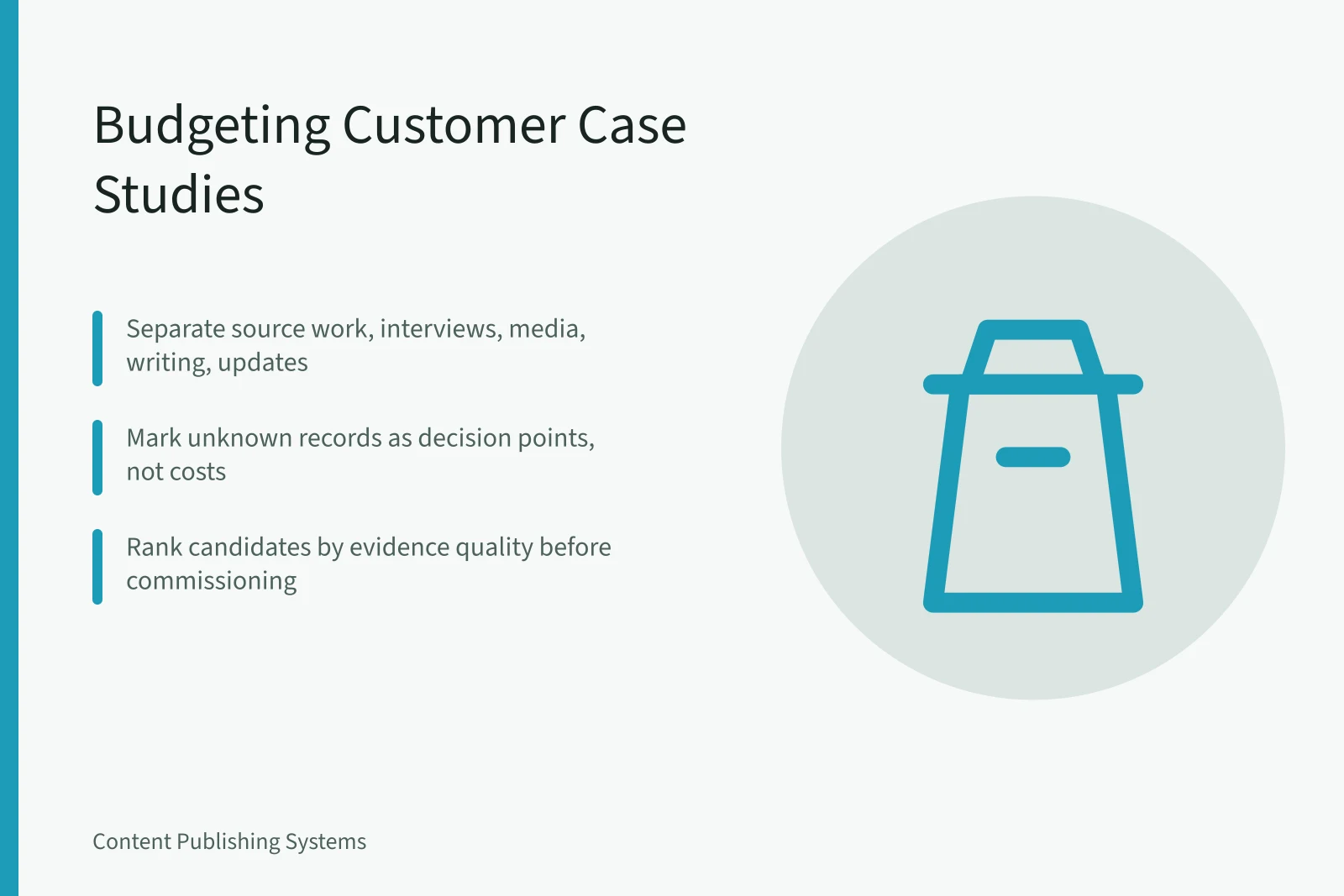
- Separate source collection from writing, permissions and updates.
- Treat unknown records as open decisions, not included costs.
- Keep sponsorship on its own disclosure line.
- Budget a source register and a dated review.
- A documented case study costs more than an opinion piece.
Scope the case study before you price it
Start with what the study has to prove. A short profile built from one interview is a different job from a study built on invoices, support tickets and two years of records.
Count access-dependent steps first. Records requests and image permissions can each stall for weeks.
Mark unknown items as decision points, not costed lines.
A content audit that finds gaps shows which claims your library already documents.
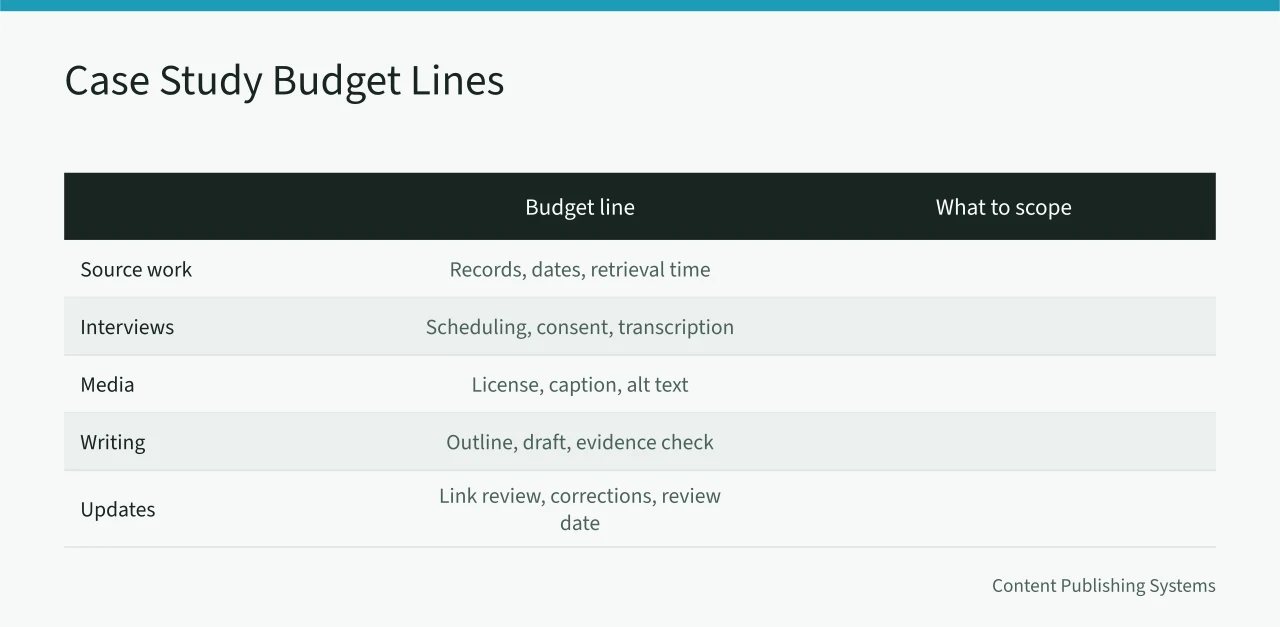
Price the production steps as separate lines
Budget line / What to scope
- Source work
- Records, dates, retrieval time, limits on what the evidence shows
- Interviews
- Scheduling, consent, transcription, quote approval
- Media
- License or credit, caption, alt text, replacement time
- Writing
- Outline, draft, evidence check, edits, disclosure copy
- Updates
- Link review, correction handling, next review date
Editing and update work rarely scale with word count. A 700-word profile resting on six documents can take longer to verify than a 2,000-word explainer.
Do not quote a provisional figure as if it covers legal review or checks nobody has scoped yet.
Brief freelancers before you compare quotes
Freelance writers price a brief, not a subject. Give them the source list, the interview plan and the disclosure wording before they quote. The U.S. Small Business Administration's guidance on managing employees and contractors covers where direction ends and supervision begins.
Attach the record list to the brief so the writer prices the research.
If you are weighing outside help, hiring a content marketing agency covers what belongs in a pitch and what should stay on your side of the table.
Decide which case studies earn the budget
Not every customer story deserves the same spend. A profile that answers a live sales objection is worth more than a trophy page nobody links to.
Rank candidates by evidence quality first. A customer who will release records and approve quotes is cheaper to document than one who will only grant a phone call.
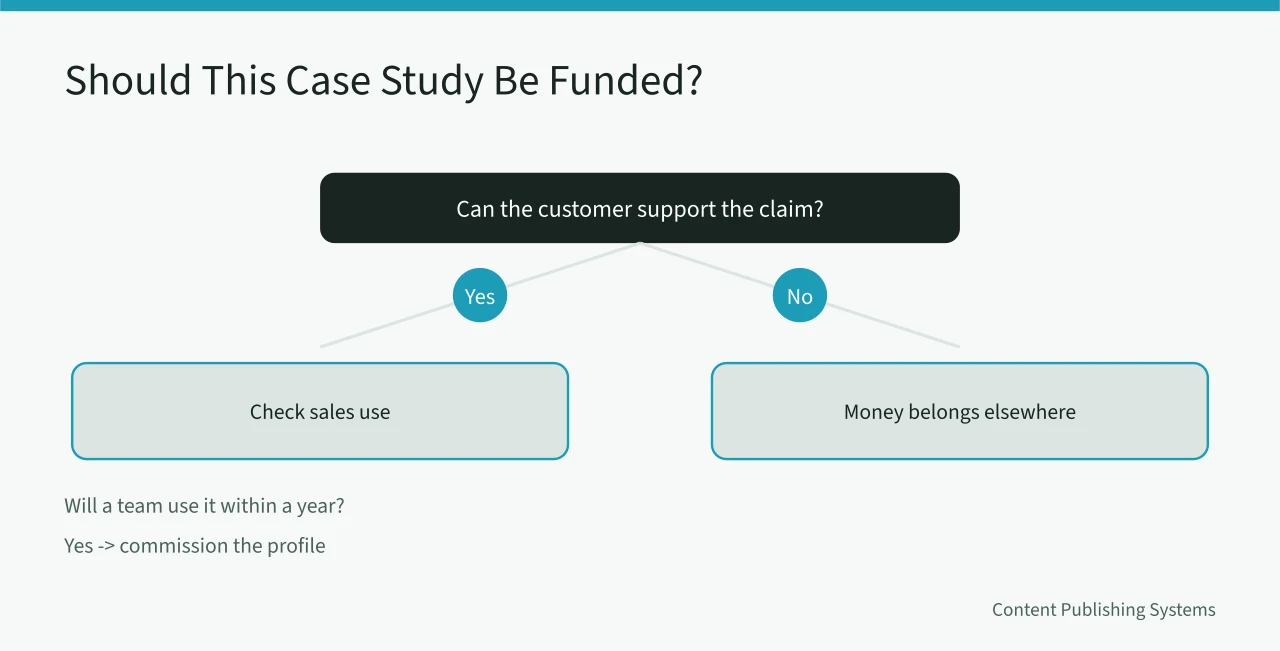
Ask two questions before you commission anything. Can the customer support the claim on the page? Will a sales or support team use the result within a year? A no on either means the money belongs elsewhere.
Set a cap on how many sponsored profiles run at once, and hold that line when a sales team asks for one more. Each one adds review and correction work, and that work compounds across a library.
A content scoring model that scores evidence quality next to sales relevance sends the budget to profiles you can verify.
Disclose sponsorship without touching the evidence
A vendor or agency may pay for a clearly marked profile. That payment does not buy a conclusion. Keep a separate disclosure record.
The FTC's native advertising guidance explains how paid content should be labeled so readers can tell advertising from editorial.
A sponsor pays for placement. It does not pay for a finding.
If the same story becomes a social post or an influencer read, the FTC rules for influencer disclosures apply to those versions too.
Example: a sponsored customer profile
Picture a mid-market software vendor paying for a customer story. The customer approves two interviewees and licenses its logo. Illustration only: the editorial work runs roughly 20 to 40 hours across sourcing, interviews, drafting and review.
The payment covers the placement label, not the sentence about what the migration actually cost.
Case studies that hold up read like reporting. Publishing thought leadership content people trust runs on the same order of work: evidence first, promotion second.
Reserve time for a handoff and an update
The deliverable is more than a page. Budget time for the source register, quote approvals, image credits, disclosure wording and a correction contact.
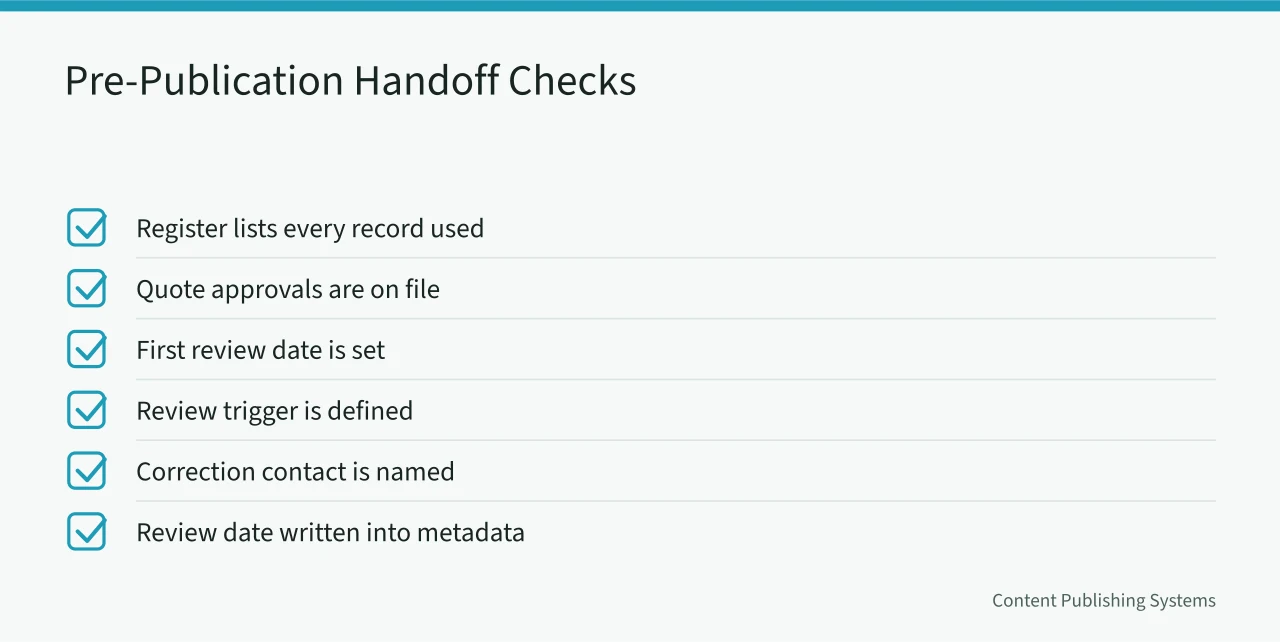
Before publication, confirm:
- The register lists every record used.
- Quote approvals are on file.
- A first review date is set.
Set a review trigger as well. Case studies go stale when a buyer changes vendors, a product is renamed or a cited figure is overtaken.
Name who watches for corrections and when the page gets rechecked. Write the review date into the page metadata so the next editor finds it without hunting through email.
Ask for the same handoff from every writer, contract or staff. A standard folder keeps the register, the approvals and the disclosure wording in one place, so a new editor can pick up the file without an interview.
Reuse is a separate job with its own budget. Adapting a verified source into a sales one-pager or a webinar is only cheap when the evidence is already on file.
Common questions
What should the first line item be?
Source work: the records needed to answer the question, plus whether they exist, are accessible and can be credited.
Should a sponsor pay for the study's conclusion?
No. Keep sponsorship in a disclosure record, separate from evidence and editorial judgment.
Why budget for updates?
Customers, products and cited figures change. A review date stops a dated profile from quietly going wrong.
How do I compare two quotes?
Compare scope, not totals. Ask which line items each quote includes.