Reviews
Part of Content Promotion Campaign Planning for Business Teams: Brief, Angles, Kit, Outreach
Narrowing the Audience First Speeds Up Content Promotion Gains
how to improve content promotion in 2027 by repairing the asset, narrowing audiences, testing angles, personalizing outreach, fixing journeys, and learning.
What to take away
- Diagnose the weak link before adding volumethe asset, campaign reason, audience, angle, outreach, destination, response, or decision rule may be failing.
- Change one important variable at a time when practical and preserve the baseline, eligible population, primary measure, guardrails, and stop condition.
- A better campaign improves qualified response without weakening truth, permission, access, editorial independence, relationships, or correction control.
Learning how to improve content promotion starts with diagnosing the weak link. A campaign can fail because the asset is ordinary, the reason now is absent, the audience is wrong, the pitch is generic, the landing experience is poor, or the team cannot respond. Apply this sequence to one campaign before adding spend or volume.
Worked example with typical ranges: a baseline sent 1,200 pitches to a purchased list and produced 4 qualified replies, a 0.3 percent rate. The test narrowed to 180 matched recipients and produced 5 qualified replies, a 2.8 percent rate. Cost per qualified reply fell from about $300 to about $40. The asset and landing page stayed the same.
Recheck the asset
Verify the audience task, original value, facts, methods, limitations, rights, disclosure, accessibility, and update owner. Ask whether a recipient could explain why the asset deserves attention now. Pause if a headline outruns the evidence.
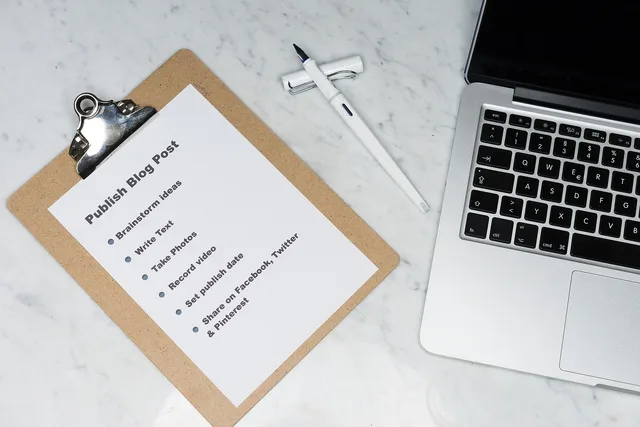
Asset recheck before promotion
- Audience task and original value
- Facts, methods, limitations, rights
- Disclosure and accessibility
- Destination and next action
- Update owner assigned
- Pause if headline outruns evidence
Narrow the promotion audience
Separate customers, prospects, journalists, creators, partners, communities, employees, and sales contacts. Define each group's situation, evidence need, channel, relationship, permission, market, and next useful action. Remove names included only because a database or platform makes them reachable.
Improve the campaign angle
Build several honest frames around a new finding, useful method, local implication, seasonal task, expert explanation, tool, or approved case. Match the angle and example to the recipient without changing the claim. Test whether the opening explains relevance before it mentions the company.
Sample angles: "We reran the 2024 method on 12 new sites." "A two-line fix for the seasonal backlog." "The one number your dashboard hides."
Make outreach individual
Show specific audience fit, state the verified value concisely, disclose the business interest, link to evidence, and offer the right expert or material. Keep the request optional. Limit follow-up and honor preferences, suppression, community rules, editorial independence, and local law.
Sample opening: "You covered [topic] on [date]. We have [specific evidence]. Here it is, and no reply is needed."
Repair the landing path
Map the journey from the user's point of view with the whole-user-problem guidance: list each step, then mark dead ends, confusion, and broken handoffs between channels. The guidance covers public digital services, not commercial pages, but the steps transfer. Test the campaign path, form, disclosure, and access need.
Align creative, message, destination, and next action. Check load, mobile layout, headings, links, forms, captions, text alternatives, disclosure, tracking, and error handling. The site's content distribution guide covers delivery more broadly.
Add paid media cautiously
Before paid promotion, write a one-sentence hypothesis, the business goal it serves, and the record you will keep. These are platform instructions, not proof of lift. Verify eligibility, implementation, consent, audience, costs, and statistical limits.
Start with a bounded audience, approved creative, modest budget, primary measure, negative guardrails, and stop rule. Exclude unsuitable groups. Confirm platform policy, privacy, advertising law, and tracking. Scale only when the asset and audience response justify another test.
Platforms such as Google Analytics 4, Mailchimp, and HubSpot can record these numbers; the choice depends on list size, budget, and data rules.
Improve through a postmortem
Compare audience, angle, channel, timing, and spend against the plan. Compare labor, accepted pitches, coverage quality, qualified actions, and negative response.
Compare corrections against the plan and record team lessons on fit and relationships. For outreach lists and follow-up cadence, see common content promotion questions.
Promotion improvement experiment
| Element | Diagnostic question | Test evidence |
|---|---|---|
| Asset | Does it deserve attention now? | Claim and audience task |
| Audience | Is the recipient truly relevant? | Observed fit and preference |
| Journey | Can the next task be completed? | Representative path test |
| Campaign | What decision will change? | Measure and stop rule |
A reasonable planning range for cold outreach: 1 to 5 percent reply, under 1 percent qualified reply, and landing-page form completion of 2 to 10 percent of visitors. Treat every range as specific to your list and offer.
Run a controlled handoff
When choosing tools, the GOV.UK technology selection guidance asks four questions: can the choice adapt, who controls the data, has security reviewed it, and what is the total ownership cost? Apply those questions to promotion tools without treating them as local approval.
For software reviews, the CISA software acquisition fact sheet lists four checks: development practice, supply-chain exposure, deployment, and vulnerability management. Add those checks to a review. For the measurement system, see content marketing analytics.
Common questions
What should be improved first?
Start with the most important uncertain assumption or recurring failure that can be tested safely, not the easiest activity count to increase. A sample rule: test one change per campaign and review results within 14 days.
Does more outreach improve promotion?
Not by itself. More volume can multiply weak targeting, complaints, suppression failures, relationship damage, response load, and reporting noise. Cap follow-up at two messages, seven days apart, and stop on any opt-out.
How should a promotion test end?
Use a prewritten decision to adopt, adapt, repeat, pause, or reject, while preserving costs, defects, affected groups, corrections, and unresolved limits. A sample stop rule: pause if qualified replies fall below the baseline for two weeks.