Strategy
Webflow CMS Limits vs Bilingual Publishing: What Teams Should Check First
Webflow CMS item limits and plan ceilings decide how a bilingual English and French build scales. Check the item math, locale URLs, and approvers before you build.
What to take away
- Webflow caps CMS items per collection and per site plan, so a bilingual build reaches the ceiling twice as fast.
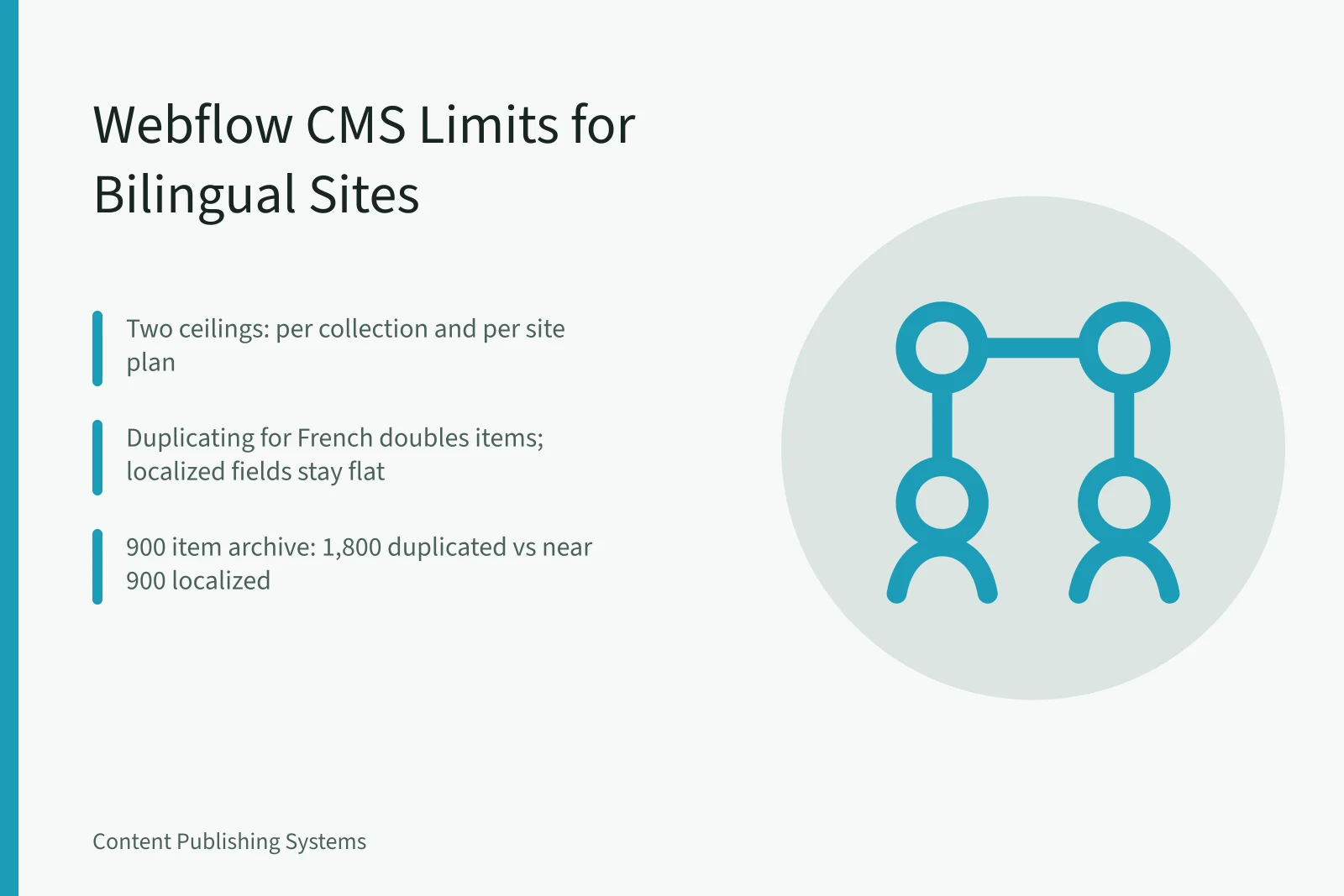
- Copying a collection for French doubles item counts. Localizing fields inside one collection keeps the count flat.
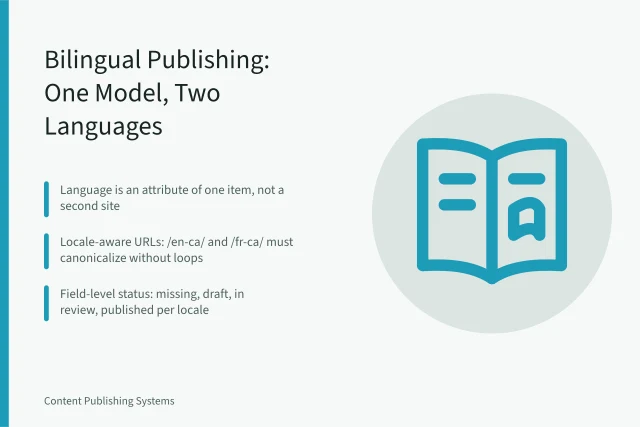
- Locale aware URLs and a translation status field belong in the content model from day one.
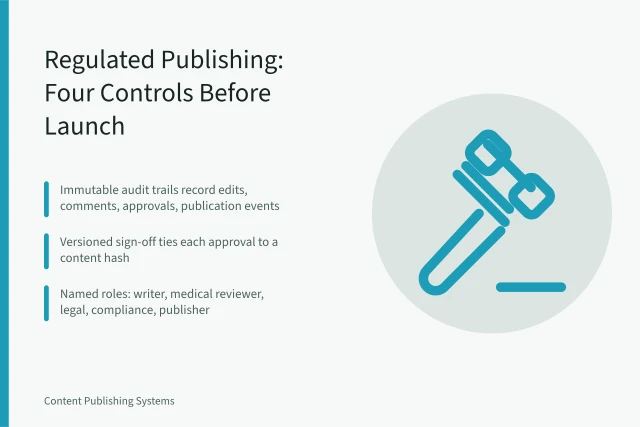
- Name one approver per language, because one reviewer rarely signs off in two languages.
- Run the item math before you choose a bilingual publishing workflow.
Webflow CMS item limits per collection and per plan
Webflow stores structured content in CMS collections, a design choice its platform overview describes. Two separate ceilings apply to those collections. One limits items inside a single collection. The other limits total items across the site plan.
Two CMS Ceilings Compared
Per collection
- What it caps
- Items in one collection
- Who shares it
- That collection only
- 600 item archive
- 600 slots
- Duplicated to French
- 1,200 slots
- Localized fields
- Stays near 600
Per site plan
- What it caps
- Total items site wide
- Who shares it
- Blogs, help, jobs, cases
- 600 item archive
- 600 slots
- Duplicated to French
- 1,200 slots
- Localized fields
- Stays near 600
Teams remember the per collection number and forget the site wide one. The second cap is shared by blogs, help articles, job posts, and case study libraries. Adding French multiplies whatever you already have.
A 600 item archive duplicated into French can consume 1,200 slots. The same archive with localized fields stays near 600. That gap decides your budget, your migration plan, and your editor training.
Check the current ceilings before you commit to a structure. This rundown of Webflow plan item ceilings covers the tiers and the warning signs.
Why bilingual publishing doubles the math
Translation makes a second copy of a page. Localization adapts the publishing system around it, the distinction this definition of language localisation draws. Bilingual teams need the second thing.
Duplication vs Localized Fields
Single language
- CMS collection
- One collection
- Item count
- One per entry
- URL pattern
- /blog/post-slug
- Approval
- One reviewer
English plus French
- CMS collection
- Shared or parallel
- Item count
- One per entry or locale
- URL pattern
- /en/ and /fr/ prefixes
- Approval
- One approver per language
Single language
- CMS collection
- One collection
- Item count
- One item per entry
- URL pattern
- /blog/post-slug
- Approval
- One reviewer
English plus French
- CMS collection
- Shared collection or a parallel one
- Item count
- One item per entry or one per locale
- URL pattern
- /en/blog/post-slug and /fr/blog/post-slug
- Approval
- One named approver per language
Duplication is simple to explain and expensive to run. A parallel French collection is easy for a separate editor to own, and it doubles every count you report to finance.
Localized fields behave differently. One item holds the English fields and the French fields, so the collection grows by language attributes rather than by rows.
A pre build checklist for English and French
- Confirm the item ceiling on your current plan and your expected two year archive.
- Decide whether French lives in shared fields or in a parallel collection.
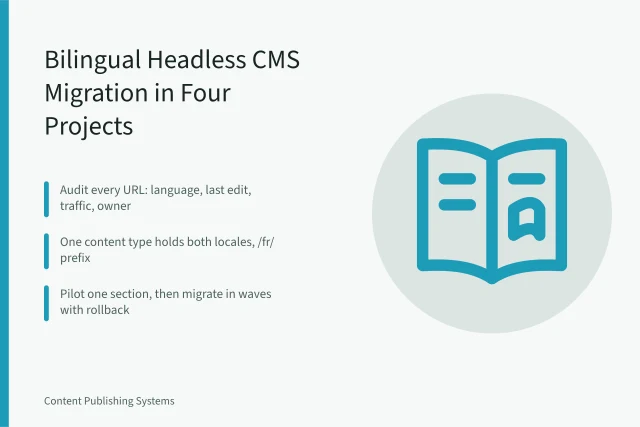
- Agree the URL pattern for both locales and plan redirects for anything that changes.
- Add a translation status field with values such as draft, in review, and published.
- Name one approver for English and one for French, and write it into the brief.
Example: a 900 item archive with a French edition
Run the arithmetic in this order.
- Count every published item across every collection today.
- Multiply by the number of locales if you plan to duplicate content.
- Compare the total against the plan ceiling and keep headroom for growth.
- If the total sits close to the ceiling, move to localized fields in one collection.
For a 900 item archive, duplication suggests 1,800 items. Localized fields keep it near 900. Neither number is a problem until the plan ceiling falls between them.
If the counts already strain your plan, review published item ceilings before adding a third locale.
French language rules that shape the build
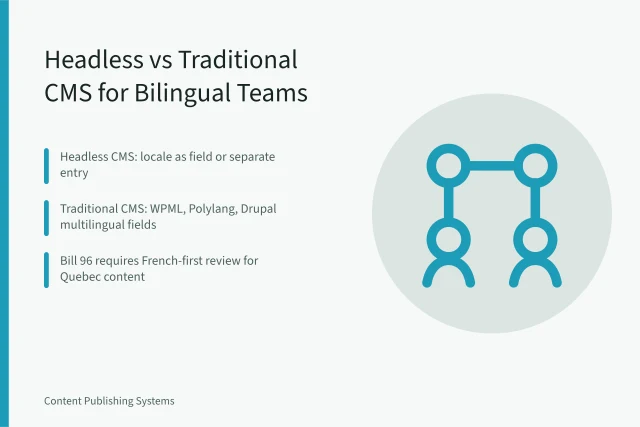
If your audience includes Quebec, French is not a nice to have. The Charter of the French Language sets requirements for commercial websites and marketing content. This Charter of the French Language overview explains its scope and history.
That pushes French into the same release cycle as English. A French page that trails a launch by three weeks becomes a compliance question rather than a scheduling preference.
How the publishing workflow changes with two locales
The stable pattern is one content model per locale, field level translation status, locale aware URLs, and a named approver for each language.
Build the model first. The plan ceiling is a constraint you check, not a structure you design around.
When French runs as a separate workflow, edits drift within a quarter. Shared fields keep one source of truth, and a status field per locale shows which pages are ready.